
Sentinel InsightsHow to improve AI visibility:five steps that actually move answers
How to improve AI visibility: measure what assistants say about you, fix your facts, earn trusted mentions and publish answers worth citing. A 5-step plan.
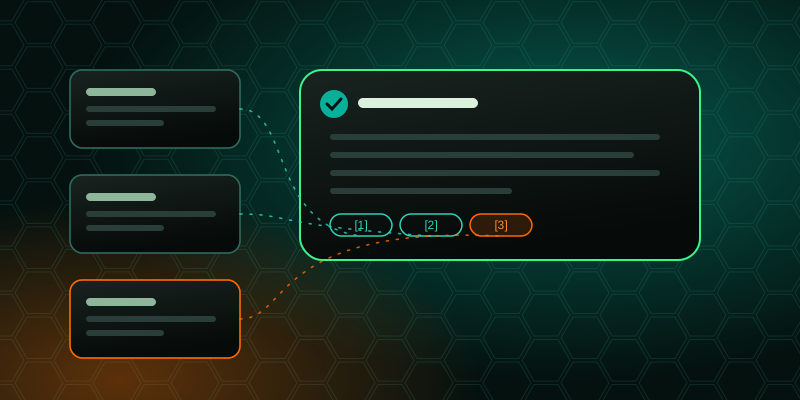
To improve AI visibility, give AI assistants more credible, consistent and current sources that describe your brand accurately. In practice that means fixing the facts on your own site, earning coverage and mentions in publications the assistants already trust, publishing pages that answer buyers’ real questions plainly, and checking what the main assistants say about you every month.
There’s no switch to flip and no way to buy a mention inside ChatGPT’s answers. AI visibility improves the same way a reputation does: through evidence that accumulates across the web, which models and AI search tools then find, read and repeat.
What AI visibility means, briefly
AI visibility is how often and how accurately your brand appears when people ask AI assistants such as ChatGPT, Gemini, Claude, Perplexity or Google’s AI Overviews about your category. It covers three things: whether you’re named at all, whether the description is right, and which sources the assistant cites when it mentions you.
We’ve covered the definition in more depth in what is AI visibility. This guide is about the practical side: what to change, in what order, and how to tell whether it’s working.
Why improving AI visibility matters now
More buyers now get an answer before they reach a website. Pew Research Center analysed the browsing data of 900 US adults across 68,879 Google searches in March 2025. Users who saw an AI summary clicked a traditional search result in 8% of visits, against 15% for users who didn’t see one. Only about 1% of visits with a summary included a click on a link inside it.
If fewer people click through, the summary itself becomes the first impression. Being named in it, and described correctly, starts to matter as much as ranking in the blue links underneath. Pew also found that Wikipedia, YouTube and Reddit were among the sources most often linked in both AI summaries and standard results, which tells you something useful: assistants lean on widely trusted, third-party sources.
Step 1: Measure where you stand
Before changing anything, write down a baseline. Pick 20 to 50 questions your buyers really ask, such as “best payroll software for small US restaurants” or “what does a fractional CFO cost”, and run them in three or four assistants. For each answer, record:
- whether your brand is named, and where it appears in the answer;
- which competitors are named instead;
- whether the facts about you are right, from pricing model to location to what you do;
- which sources the assistant cites or links.
Repeat the same questions monthly. Answers vary from run to run, so look at patterns over several checks rather than any single response. A shared spreadsheet with one row per question and one column per assistant is enough to start.
Step 2: Fix the facts you control
Assistants pull from your own pages as well as everyone else’s. If your site, profiles and listings disagree with each other, the answers will too. Start with these:
- A clear About page. Who you are, what you do, who you serve, where you’re based and who leads the company, in plain sentences.
- Service and product pages with direct answers. Open each with a one or two sentence definition of what it is and who it’s for.
- Published pricing or pricing models where you can share them, so assistants don’t guess.
- Consistent profiles. LinkedIn, Google Business Profile, Crunchbase, G2 or sector directories should match your site on names, dates and descriptions.
- Structured data. Organization, Service, Product and FAQ schema help search engines read your pages, though they aren’t a shortcut to being named.
Step 3: Earn mentions in sources AI assistants trust
This is the step that moves AI visibility most, and the one most brands under-invest in. Assistants repeat what credible third parties say. If no independent publication, review site or expert list mentions you, an assistant has little reason to name you, no matter how good your own site is.
The work here is classic digital PR, aimed with AI answers in mind:
- Trade and business coverage. Interviews, data stories and expert commentary in the titles your category’s buyers read.
- Comparison and “best of” lists. Many AI answers to “best X for Y” questions draw on listicles and roundups. Find the ones assistants cite in your category and pitch the editors who maintain them.
- Review platforms. Genuine, recent reviews on the sites that matter in your sector.
- Podcasts and video. Transcripts and descriptions are text that gets read and cited.
- Community discussion. Helpful, disclosed participation where your buyers ask questions. Spam in forums tends to backfire.
Pitch quality matters here. Cision’s 2025 State of the Media report, based on a survey of more than 3,000 journalists, found that 86% will reject a pitch straight away if it isn’t aligned with their beat or audience. Ten relevant pitches beat a hundred generic ones. Our digital PR service is built around that idea.
Paid placements can help reach an audience, but they should always be labelled as paid, so readers know what they’re looking at.
Step 4: Publish answers worth citing
Assistants favour pages that answer a question directly and back it up. You don’t need hundreds of articles. You need the right ones:
| Page type | What it answers | Why assistants use it |
|---|---|---|
| Definition pages | What is X, and who is it for | Gives a clean, quotable sentence |
| Comparison pages | X vs Y, or X vs doing it in-house | Matches common buyer questions |
| Pricing explainers | How much X costs and what drives the price | Fills a gap most competitors leave |
| Original data | Survey or usage findings with a method | Gives journalists and assistants something new to cite |
| Expert guides | How to do X step by step | Shows depth on a topic over time |
Open each page with a short, direct answer, then expand. Name sources for every statistic. Keep dates current, because an answer from 2023 looks stale to buyers and to tools that weigh freshness.
A hypothetical example
Take a hypothetical cybersecurity training company that’s rarely named when people ask an assistant for “security awareness training for small businesses”. A sensible plan might include a plain definition page, a pricing explainer, a short survey of small-business IT managers published with its method, expert commentary pitched to IT trade titles, and outreach to the editors of two roundups the assistants already cite. None of it guarantees a mention, but each piece adds a source an assistant could reasonably draw on.
Step 5: Review monthly and adjust
Compare each month’s answers with your baseline. Look for three changes: whether you’re named more often, whether descriptions are more accurate, and whether new sources about you are being cited. Tie these back to the work done. If a feature in a trade title starts appearing as a cited source, that’s a sign to do more of that kind of coverage.
Be patient with the timeline. Some AI search tools read the live web and can reflect new coverage within weeks. Model training data updates far less often. Expect a few months before patterns are clear, and treat anyone promising guaranteed AI mentions with caution. We never guarantee them, because no one controls what an assistant says.
Getting help with AI visibility
Many teams can handle the measurement and the on-site fixes themselves. Earning third-party coverage at a steady pace is usually where they need support. Our AI Visibility Audit is a one-off $2,500 project that tests buyer questions across the main assistants and maps the sources behind each answer, and our AI Visibility Programme runs the ongoing work from $4,500 a month.
You can see how the audit and programme work on our AI search visibility page, or compare options on the pricing page.
Questions readers ask
How long does it take to improve AI visibility?
AI search tools that read the live web can reflect new coverage within weeks. Changes that depend on model training data take longer, so most brands should expect several months before clear patterns appear.
Can you pay to appear in ChatGPT answers?
You can't buy a mention inside ChatGPT's own answers. You can earn coverage in sources assistants read, and paid placements can reach audiences, but they should always be labelled as paid.
Does schema markup improve AI visibility?
Structured data helps search engines read your pages accurately, which can support AI search tools. It isn't a shortcut on its own. Credible third-party mentions matter more.
How do I check my AI visibility?
Write a list of 20 to 50 real buyer questions, run them in three or four assistants, and record whether you're named, how you're described and which sources are cited. Repeat monthly.
Find out what AI assistants say about you
We'll test the questions your buyers ask and show you the sources behind every answer.